

Writing a question
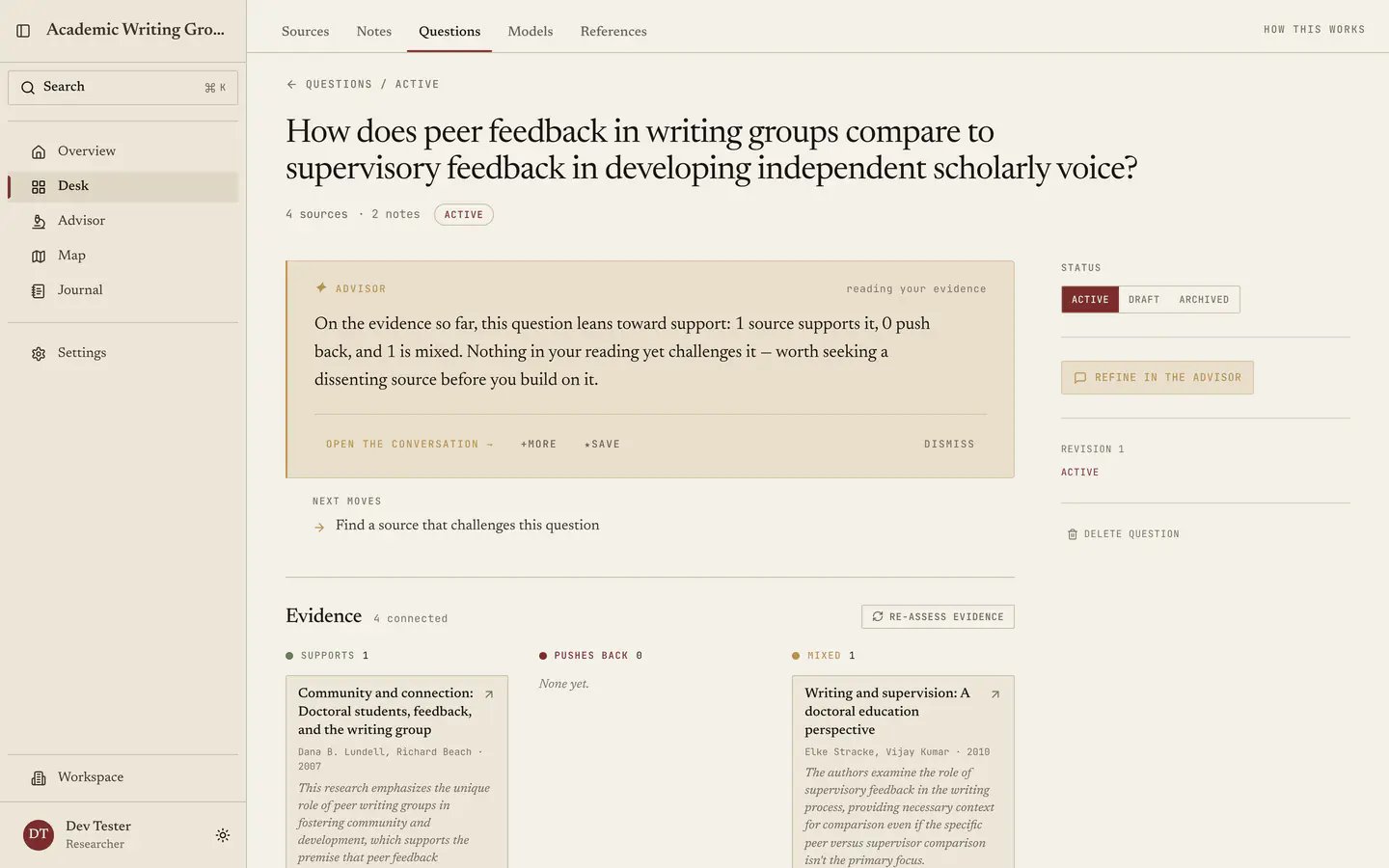
Hit New question and type it, adding context or detail underneath when the question alone does not carry it. Write the question you are actually asking rather than the one that sounds most respectable, because nobody can help you with a question you have hedged into safety, and that includes your advisor, human or otherwise.Editing questions
Use Edit question on any question page, or Edit in the list. Main questions and sub-questions share the same editor for the question, description, status, scope, and design dimension. Save your changes or cancel to keep the saved version.Sub-questions
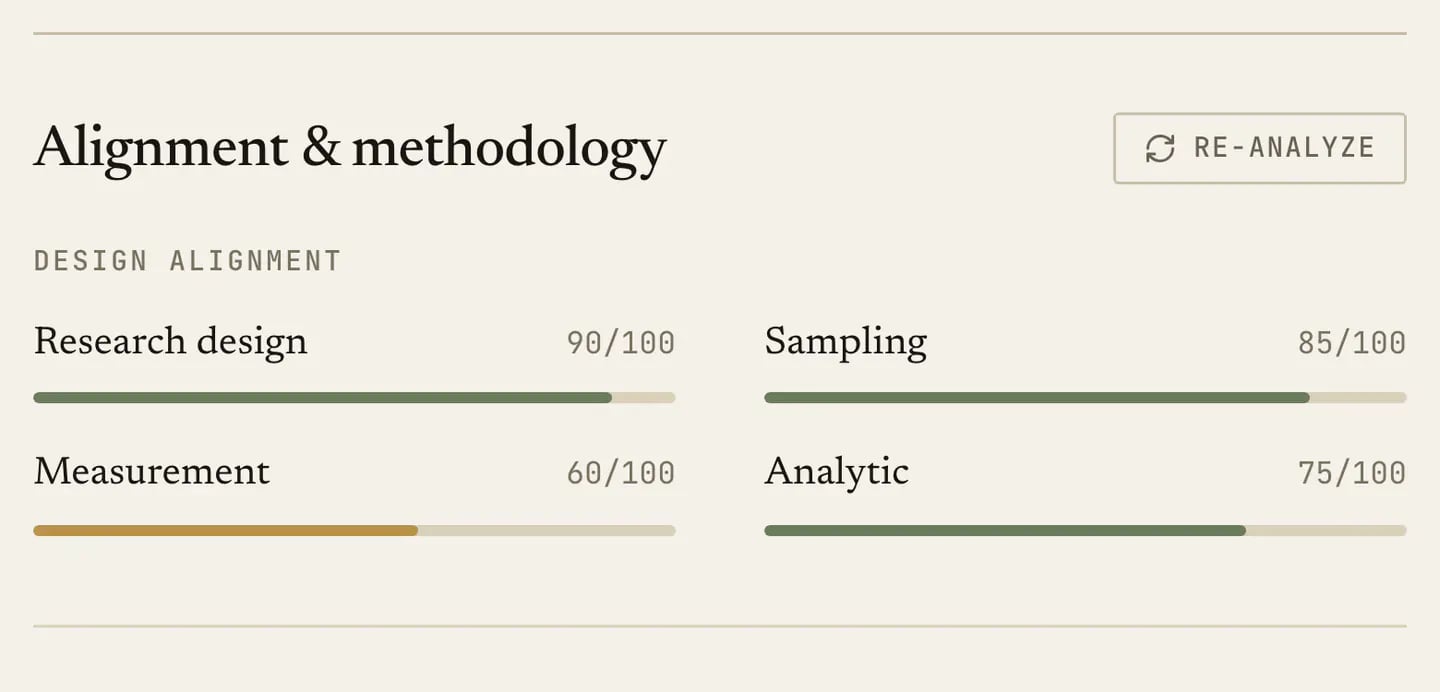
Top-level questions can have direct sub-questions. Use Add sub-question on a question page to create one. Each child links back to its parent and keeps its own evidence, notes, and conclusion. To organize existing questions, open Question actions and choose Move under… or Make top-level. From a parent, Add existing question lets you choose a question to move beneath it. Moving preserves its evidence, notes, and history. Questions nest one level deep, so move or promote a question’s children before making that question a child itself. Choose Substantive for questions about the phenomenon you are studying, or Design for questions about how to conduct the research. Design questions can be top-level or sub-questions and target research, sampling, measurement, or analytic design. For example, a substantive question about institutional trust could have an analytic sub-question asking how to distinguish trust’s contribution from income and education. Select the design badge on its page to open the corresponding project design. Most real projects have one or two questions that matter and a handful of operational questions underneath. Making that hierarchy explicit helps for the obvious reason, since it is usually the skeleton of your chapters, and for a less obvious one: it is where you notice that a “sub-question” is really a separate project.Design alignment
Analyze scores a question against four dimensions:- Research design. Is the overall approach right for what is being asked?
- Sampling design. Will who or what you study support the claim?
- Measurement design. Can the constructs actually be measured this way?
- Analytic design. Will the planned analysis answer the question?
Evidence
Open a question and it shows the sources linked to it, split three ways into Supports, Pushes back and Mixed. The split does not happen on its own, since linked sources start unweighed and the page says so with “These sources haven’t been weighed yet.”, so Assess the evidence reads them against the question and sorts them while Re-assess runs again once you have added more.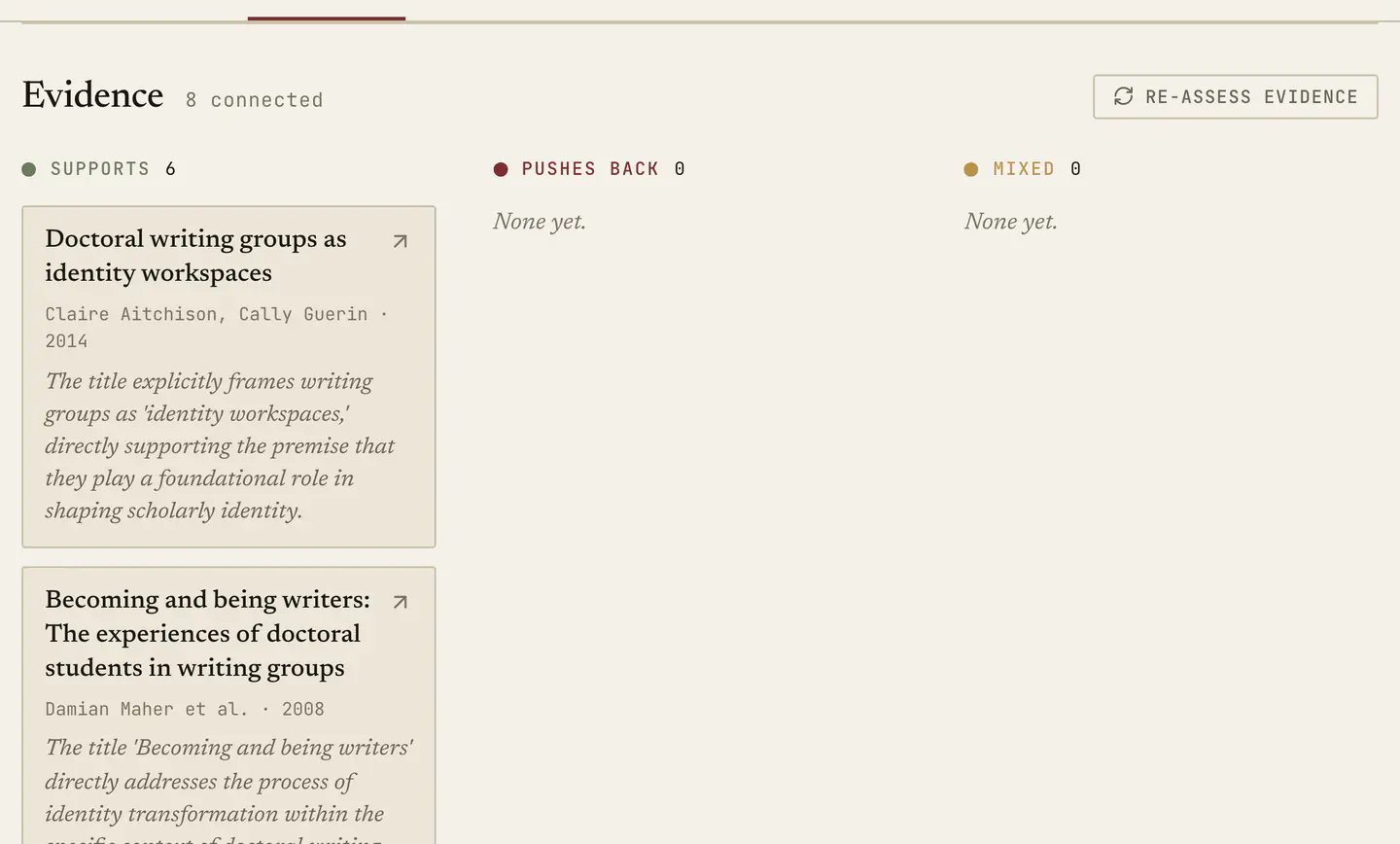
Version history
Every revision of a question is kept, and you can read back through them. This matters more than it sounds, because research questions drift, usually for good reasons and occasionally because you have quietly retreated from something hard, so putting what you asked in month four next to what you are asking now is one of the few honest checks available on your own thinking. It also supplies the “how did this project evolve” paragraph that every thesis needs and nobody can remember.Archiving
Questions can be archived instead of deleted, and archived ones stay searchable. Prefer archiving, because a question you abandoned is part of the record of the project and “why didn’t you look at X?” is a normal thing to be asked in a viva, which an archived question with its history answers completely.Refining with the advisor
Refine in the advisor opens a conversation scoped to this question, and it will pressure-test clarity, scope and testability, arguing the counter-case at higher Pushback. It will not write your research question for you, though it will tell you which of two phrasings commits you to a claim you cannot support, which does you more good anyway.How questions change everything else
Worth being explicit, because this is why the tab deserves upkeep:- Your advisor reads your library against these questions, so vague questions get you vague observations.
- Sources link to questions, so a question shows you the evidence you have gathered for it, and more usefully, that you have gathered none.
- The check-in offers to pressure-test questions you added recently.
- Design alignment hands you the shape of a methods defence before you have to give one.